YAMAHA 12R-AO Voltage Regulator
fits make: Yamaha.
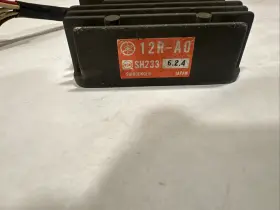
( Type: Voltage Regulator ), ( Machine Type: Street Motorcycle ), ( Oe/oem Part Number: Sh233.6.2.4 ), ( Manufacturer Part Number: 12R-AO ), ( Universal Fitment: No )
Review YAMAHA Voltage Regulator
The Yamaha 12R-AO Voltage Regulator is an essential component for maintaining the correct electrical voltage in your Yamaha outboard motor. This regulator is specifically designed for use with Yamaha 4-stroke outboard motors, ensuring optimal performance and reliability.
The 12R-AO Voltage Regulator is a self-exciting, brush-type unit that automatically adjusts the output voltage to maintain the battery charge at the optimal level. It features a high-efficiency design that minimizes power loss, providing more power to your motor while reducing fuel consumption.
The regulator is equipped with a built-in temperature sensor that monitors the ambient temperature and adjusts the output voltage accordingly. This helps prevent damage to the battery caused by overcharging or undercharging, ensuring a long service life for both the regulator and the battery.
The 12R-AO Voltage Regulator is designed for easy installation and maintenance. It comes with a pre-wired harness that simplifies the wiring process, allowing for a quick and hassle-free installation. The regulator also features a waterproof design that protects against moisture and corrosion, making it ideal for use in marine environments.
The Yamaha 12R-AO Voltage Regulator is built to the highest standards of quality and durability. It is constructed from high-grade materials, including impact-resistant ABS plastic and corrosion-resistant stainless steel components. The regulator is also designed to withstand the harsh conditions of marine use, making it a reliable choice for boaters and anglers alike.
In summary, the Yamaha 12R-AO Voltage Regulator is a high-performance, reliable, and easy-to-install component that ensures optimal electrical performance for your Yamaha outboard motor. Its self-exciting design, built-in temperature sensor, and waterproof construction make it an ideal choice for marine applications, while its high-efficiency design and long service life provide significant cost savings over time.
The Yamaha 12R-AO Voltage Regulator is a crucial component in the charging system of Yamaha outboard motors. Here are some pros and cons that can help you decide whether to buy it or not:
Pros:1. Designed specifically for Yamaha outboard motors: The Yamaha 12R-AO Voltage Regulator is engineered to work seamlessly with Yamaha outboard motors, ensuring optimal performance and reliability.
2. Improved battery charging: This voltage regulator provides a consistent charging voltage, which helps maintain the health and longevity of the battery.
3. Protection against overcharging: The regulator prevents overcharging, which can damage the battery and reduce its lifespan.
4. Compact and easy to install: The regulator is small and can be easily installed in most applications.
5. Durable and reliable: Yamaha is known for producing high-quality components, and the 12R-AO Voltage Regulator is no exception.
Cons:1. Cost: The Yamaha 12R-AO Voltage Regulator may be more expensive than some aftermarket alternatives.
2. Limited compatibility: This regulator is only compatible with Yamaha outboard motors, so it may not be suitable for other types of boats or engines.
3. No digital display: Unlike some modern voltage regulators, the Yamaha 12R-AO does not have a digital display, making it more difficult to monitor charging status.
In conclusion, the Yamaha 12R-AO Voltage Regulator is an excellent choice for those who own Yamaha outboard motors and want a reliable and efficient charging system. Its consistent charging voltage, overcharging protection, and compatibility with Yamaha engines make it a worthwhile investment. However, its cost and lack of a digital display may be a deterrent for some buyers.
Recommendation:If you own a Yamaha outboard motor and are looking for a high-quality voltage regulator, the Yamaha 12R-AO is a great option. Its proven performance and reliability make it a wise investment for those who want to ensure the longevity of their battery and charging system. However, if cost is a concern or you have a different type of engine, you may want to consider alternative options.
Details:
part #: 12r prices
- $15.00-$112.89
specifications rightrectifier:
- for makes: Yamaha
- type: Voltage Regulator
- machine type: Street Motorcycle
- oe/oem part number: Sh233.6.2.4
- manufacturer part number: 12R-AO
- universal fitment: No
shipping rightrectifier:
- type: Calculated
- carrier: UPS, FedEx, USPS
- service: UPS Ground, FedEx Ground / FedEx Home Delivery, USPS Priority Mail
- cost: $10.81
- class: Standard, Expedited
- transit: 3-6 Days
returns rightrectifier:
- policy: Returns Accepted
- paid by: Buyer
- time: 30 Days
offer rightrectifier:
- options: Ship-to-home
- availability: In Stock
- sold: 0
- quantity: 1
- started: November 30, 2025
general rightrectifier:
- condition: Used
- Motorcycle Scooter Parts Accessories > Electrical Ignition Components > Voltage Regulators Rectifiers
seller rightrectifier:
- rating: 100.0%
- # reviews: 3975
- city: Barberton, Ohio
payments rightrectifier:
- credit card: Visa
- other
- wallet: Google-pay
Yamaha 12R Is Similar To:
- Yamaha 5jw-81960-00-00 02 03 2002 2003 Yzf R1 Rectifier Voltage Regulator B91 (48.1% similar) Part #: yamaha 5JW-81960-00-00 for sale...(June 15th, 2024)
- Yamaha 1sl-81960-00-00 2014 2019 Yz450f Oem Rectifier Regulator Yz250f 2018 18 2 (35.4% similar) 2018 yamaha YZ450F oem rectifier/regulator p/n 1SL-81960-00-00 18/2, good working used condition as pictured, pulled from the strong running fits 2014 -2018 YZ250F model's 2014 -2019...(June 16th, 2024)
- Yamaha 1wd-h1960-00-00 20-22 Mt-03 15-22 Yzf R3 Rectifier Voltage Regulator (50.9% similar) Please review all pictures to assess the condition of item. This part came from a used motorcycle so there is normal wear and tear. Yamaha 20-22 MT-03 15-22 SF r3 rectifier voltage regulator 1WD-H1960-00- this rectifier is in very good condition and shows normal signs of wear...(June 16th, 2024)
- Yamaha 5sl-81960-00-00 2003-2005 R6 2006-2009 R6s Rectifier Voltage Regulator Oem (46% similar) 03-05 yamaha R6. Fast free shipping in the USA. Removed from a running 09 yamaha R6S with 23K miles is good used voltage regulator rectifier in working order refer to pictures for more details. 06-09 yamaha R6S...(June 16th, 2024)
- Yamaha 4xy-81960-00-00 08-16 Yzf-r6 Oem Rectifier Voltage Regulator (52% similar) Do not attempt to repair the item. Before removal, it was tested and inspected found to be fully functional. If shipping needs to be expedited, please let us know. This rectifier is in excellent used condition. Shipping/handling: shipping is free domestic. This rectifier was removed from...(June 16th, 2024)
- Yamaha Sh678-11 G7.1.6 Yzf R6 Regulator 06-07 Oem Good n (43.2% similar) Good condition...(June 16th, 2024)
- Yamaha Sh232 1983 Virago 750 Xv750 Rectifier Voltage Regulator Id Oem (58% similar) Picture in the listing may not be of actual item sold; it a stock picture only. Axle seals, front and drive shaft seals will also need to be replaced. Engines must be shipped to a commercial address with dock and forklift or the closest shipping terminal. Depending on the age of vehicle and...(June 17th, 2024)
- Yamaha 1d7-81960-00-00 Oem Voltage Regulator Mint 07-14 Yzf-r1 Yzfr1 Fh020aa Rectifier n (45% similar) Normal condition...(June 17th, 2024)
- Yamaha 5bn-81960-00-00 2000 00-03 Vstar Xvs1100 Oem Voltage Regulator Rectifier Assy (47% similar) Office use: Lr-rs 00XVS1100-001015...(June 17th, 2024)
- Yamaha Sh719aa 2004-2009 Fz6-s Fz6s Fz6 Fz600 Rectifier Voltage Regulator (51.9% similar) Buyer pays return shipping. Stock number: B800. Please see all pictures for the details. Comes with everything seen in the photos. 2004 -2009 yamaha FZ6-S FZ6S FZ6 FZ600 rectifier voltage regulator. All parts should be installed by a licensed mechanic. Donor bike model: 2005 yamaha FZ6...(June 17th, 2024)
- Yamaha 27d-81960-00-00 11-17 Stryker V Star Xvs 950 1300 Voltage Regulator Oem (51.4% similar) What you see in the photos is what are buying. Items are carefully shipped out with ample amounts of padding. Due to the motorcycles age some part numbers are unavailable. These parts are from a running 2013 yamaha striker CVS 1300 XVS13. Parts potentially fit multiple years/ model's...(June 17th, 2024)

5 offers $15.00–$112.89 USD
- Used. Offer #1 priced at $20.00 + $10.65 delivery = $30.65* total. +$10.65 shipping
- Used. Offer #2 priced at $15.00 + $9.42 delivery = $24.42* total. Norton OH 44203.+$9.42 shipping
- New. Offer #3 priced at $112.89 + $0.00 delivery = $112.89* total. Yamaha XJ 550 R -- 1981-1983. Yamaha FZ 600 -- 1986-1988.FREE SHIPPING
- New. Offer #4 priced at $29.00 + $0.00 delivery = $29.00* total. Xs400 1982-1983. Xj900 Seca 1983.FREE SHIPPING
- Used. Offer #5 priced at $5.00 + $11.35 delivery = $16.35* total. +$11.35 shipping